Characteristics of an Educator: 11 Core Qualities
Jul 26
/
Islam ElHadary
The role of an educator extends far beyond delivering curriculum content and assigning grades. Effective teaching requires a complex blend of personal qualities, professional skills, and adaptive mindsets that shape how students learn, grow, and prepare for their futures. As classrooms evolve with technological advances and changing student needs, understanding the characteristics of an educator becomes increasingly important for both aspiring teachers and experienced professionals seeking to refine their practice. The most impactful educators share common traits that transcend subject areas, grade levels, and teaching contexts, creating learning environments where all students can thrive.
Subject Matter Expertise and Continuous Learning
Deep content knowledge forms the foundation of effective teaching. Educators must possess thorough understanding of their subject areas to explain concepts clearly, answer questions confidently, and connect ideas across disciplines. This expertise enables teachers to break down complex topics into digestible segments and identify where students struggle.
However, subject mastery alone doesn't define the characteristics of an educator. The teaching profession demands continuous improvement and adaptation as research reveals new pedagogical approaches and societal needs shift. Effective educators maintain a growth mindset, regularly updating their knowledge through professional development, collaboration with colleagues, and engagement with current research.
In 2026, this commitment to lifelong learning has become particularly critical as artificial intelligence transforms educational practices. Teachers who embrace emerging technologies and understand their applications create more relevant, engaging learning experiences. The integration of AI tools for lesson planning, personalized feedback, and assessment design represents a significant shift in how educators approach their work.
However, subject mastery alone doesn't define the characteristics of an educator. The teaching profession demands continuous improvement and adaptation as research reveals new pedagogical approaches and societal needs shift. Effective educators maintain a growth mindset, regularly updating their knowledge through professional development, collaboration with colleagues, and engagement with current research.
In 2026, this commitment to lifelong learning has become particularly critical as artificial intelligence transforms educational practices. Teachers who embrace emerging technologies and understand their applications create more relevant, engaging learning experiences. The integration of AI tools for lesson planning, personalized feedback, and assessment design represents a significant shift in how educators approach their work.
Staying Current in a Changing Field
Modern educators must balance traditional pedagogical knowledge with technological fluency. This includes:
- Understanding how students learn best according to cognitive science research
- Staying informed about curriculum standards and educational policy changes
- Exploring new instructional technologies and evaluating their classroom applications
- Participating in professional learning communities and conferences
- Reading educational research and applying evidence-based practices
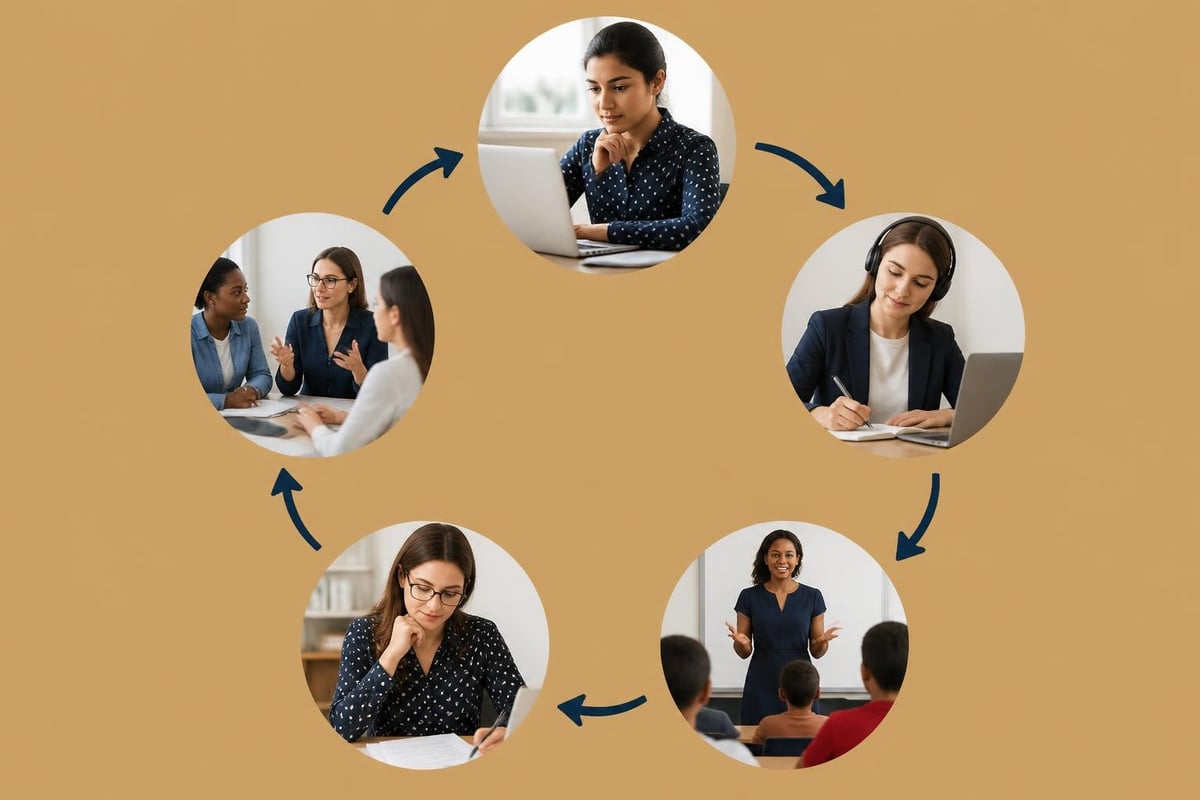
The essential qualities that make an effective educator include recognizing that education itself is a dynamic field requiring constant adaptation. Teachers who view themselves as perpetual learners model this mindset for their students, demonstrating that education doesn't end with formal schooling.
1. Communication and Interpersonal Skills
Clear, effective communication stands among the most vital characteristics of an educator. Teachers must convey complex information in ways that diverse learners can understand, adapting their language, examples, and explanations to match student needs. This involves more than speaking clearly; it requires active listening, reading nonverbal cues, and creating dialogue rather than delivering monologues.
Interpersonal skills extend beyond student interactions. Educators collaborate with colleagues, communicate with parents and guardians, work with administrators, and sometimes coordinate with community partners. Each relationship requires different communication approaches while maintaining professionalism and clarity.
Interpersonal skills extend beyond student interactions. Educators collaborate with colleagues, communicate with parents and guardians, work with administrators, and sometimes coordinate with community partners. Each relationship requires different communication approaches while maintaining professionalism and clarity.
| Communication Context | Key Skills Required |
| Student Instruction | Clarity, patience, adaptability, active listening |
| Parent Conferences | Empathy, honesty, solution-focused dialogue |
| Colleague Collaboration | Openness, constructive feedback, shared problem-solving |
| Administrative Reporting | Precision, documentation, professional tone |
Building Genuine Connections
The ability to build authentic relationships with students creates trust and psychological safety in the classroom. When students feel understood and valued, they engage more deeply with learning and take academic risks necessary for growth. This characteristic of an educator involves genuine interest in student wellbeing, remembering personal details, and creating space for students to express themselves.
Effective educators also recognize that communication includes written feedback on assignments, email correspondence, and digital interactions through learning management systems. Each touchpoint represents an opportunity to encourage, guide, and support student development.
Effective educators also recognize that communication includes written feedback on assignments, email correspondence, and digital interactions through learning management systems. Each touchpoint represents an opportunity to encourage, guide, and support student development.
2. Adaptability and Problem-Solving Capacity
Educational contexts rarely proceed exactly as planned. Technology fails, students arrive with unexpected challenges, school schedules shift, and external events impact the learning environment. Among the critical characteristics of an educator is the capacity to adapt quickly while maintaining instructional quality and student support.
Adaptability manifests in multiple ways. Teachers adjust lesson pacing when students need more time to grasp concepts or accelerate when learners demonstrate mastery. They modify instructional strategies when initial approaches don't resonate with particular groups. They create alternative assessments for students with different needs and learning styles.
This flexibility extends to embracing educational innovations. Five characteristics of an effective 21st-century educator include anticipating future trends and adapting teaching methods accordingly. In 2026, this means incorporating AI literacy into instruction and helping students develop skills for an AI-augmented world.
Creative Problem-Solving in Practice
When obstacles arise, effective educators employ creative problem-solving rather than rigid adherence to plans. They might:
- Redesign a failed group activity into an individual reflection exercise
- Transform a technology malfunction into a lesson about troubleshooting
- Address classroom management issues by modifying seating arrangements or activity structures
- Differentiate instruction on the fly when formative assessment reveals learning gaps
- Integrate current events into planned curriculum to increase relevance
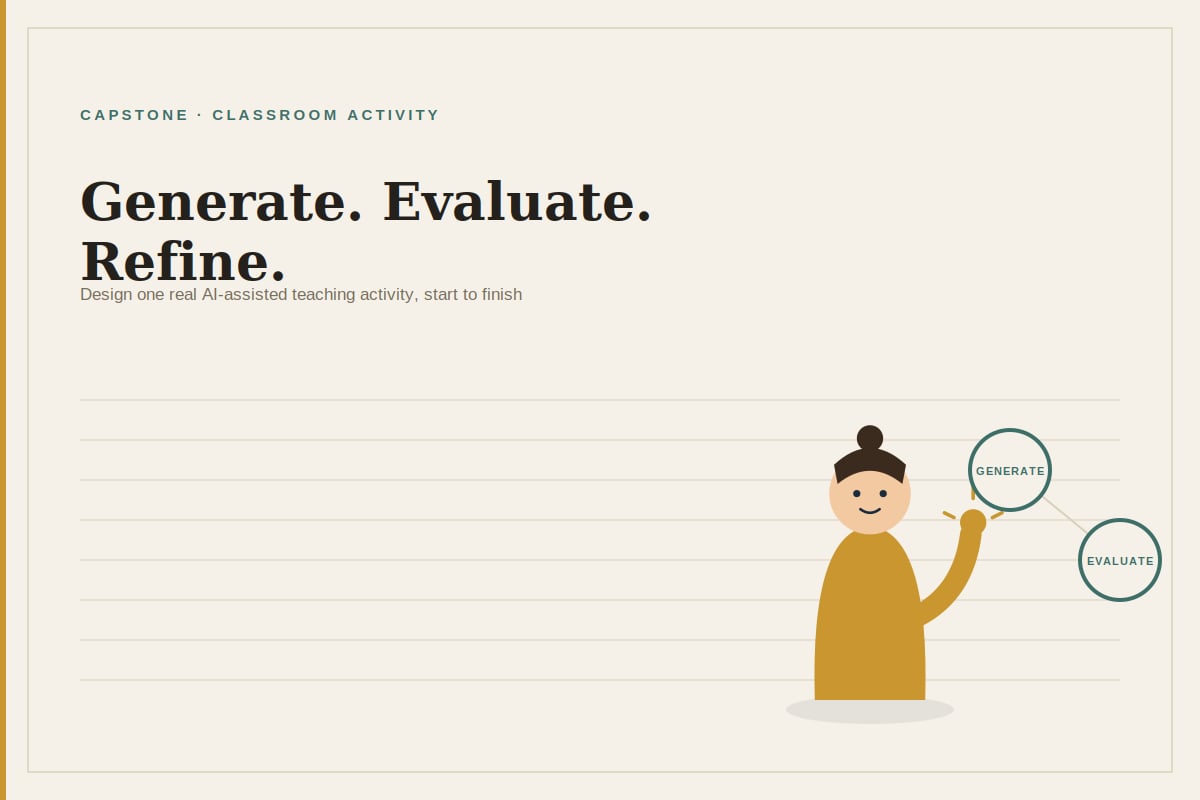
The Hadary Institute's approach to professional development recognizes that today's educators need practical skills for navigating AI-enhanced classrooms while maintaining pedagogical excellence. AI Literacy Certification for Educators provides hands-on training in prompt engineering, ethical AI use, and designing AI-assisted teaching activities that complement rather than replace human judgment and creativity.
3. Empathy and Emotional Intelligence
Understanding students as whole individuals rather than simply academic performers represents a defining characteristic of an educator. Empathy allows teachers to recognize when students struggle with personal challenges affecting their learning, respond compassionately to behavioral issues, and create inclusive environments where all students feel valued.
Emotional intelligence involves self-awareness, self-regulation, motivation, empathy, and social skills. Educators with high emotional intelligence manage their own stress and emotions effectively, preventing frustration from impacting their interactions with students. They read classroom dynamics accurately and intervene appropriately when tensions arise.
This characteristic proves particularly important when working with diverse student populations. Cultural awareness, sensitivity to different family structures and socioeconomic backgrounds, and recognition of how identity impacts student experiences all stem from empathetic understanding. Research on characteristic competencies for effective teachers emphasizes cultural awareness and adaptability as essential qualities.
Creating Emotionally Safe Learning Spaces
Empathetic educators establish classroom norms that prioritize:
- Respect for different perspectives and backgrounds
- Zero tolerance for bullying or discrimination
- Recognition that mistakes are learning opportunities
- Validation of student emotions and experiences
- Support systems for students facing challenges
When students feel emotionally safe, they participate more freely, ask questions without fear of judgment, and develop the confidence necessary for academic risk-taking. This psychological safety emerges directly from educators who demonstrate consistent empathy and emotional intelligence.
4. Organizational Skills and Preparedness
Behind effective teaching lies substantial organization and preparation. The characteristics of an educator include meticulous planning, resource management, time allocation, and administrative task completion. Disorganized teachers struggle to maximize instructional time, lose student work, miss deadlines, and create confusion that undermines learning.
Preparedness extends beyond having lesson plans written. It involves anticipating student questions, preparing multiple examples, gathering necessary materials in advance, and having backup activities ready when lessons finish early or technology fails. Twelve characteristics of an effective teacher identify preparedness and organization as foundational qualities.
| Organizational Area | Impact on Teaching Effectiveness |
| Lesson Planning | Ensures coherent learning progressions and efficient time use |
| Grading and Feedback | Enables timely, specific feedback that guides student improvement |
| Classroom Management | Creates predictable routines that minimize disruptions |
| Resource Curation | Provides diverse, high-quality learning materials readily accessible |
| Data Tracking | Informs instructional decisions with evidence of student progress |
Systems That Support Student Learning
Effective educators develop systems for managing the complex logistics of teaching. They create grading rubrics in advance, establish clear submission procedures, maintain organized digital and physical files, and schedule tasks to avoid last-minute scrambles. These systems free mental energy for creative teaching and responsive student support rather than administrative chaos.
In 2026, organizational skills include managing digital learning platforms, tracking student progress through data dashboards, and integrating AI tools that streamline routine tasks. Educators who leverage technology for organization create more time for high-impact activities like individualized instruction and meaningful feedback.
In 2026, organizational skills include managing digital learning platforms, tracking student progress through data dashboards, and integrating AI tools that streamline routine tasks. Educators who leverage technology for organization create more time for high-impact activities like individualized instruction and meaningful feedback.
5. Student-Centered Mindset and Advocacy
Placing student needs, growth, and wellbeing at the center of educational decisions distinguishes exceptional educators. This characteristic manifests as flexibility in approach, responsiveness to feedback, and willingness to advocate for students even when it requires challenging existing systems or practices.
A student-centered mindset means making instructional decisions based on what students need rather than what's most convenient for the teacher. It involves seeking student input on learning preferences, offering choices in how students demonstrate understanding, and recognizing that standardized approaches don't serve all learners equally well.
Advocacy extends this mindset beyond the classroom. Effective educators speak up when policies or practices harm students, push for resources and support their students need, and work to remove barriers to student success. They recognize systemic inequities and actively work toward more just educational experiences.
Balancing Authority with Support
Student-centered teaching doesn't mean abdicating authority or eliminating structure. Rather, it involves wielding that authority in service of student growth. Clear expectations, consistent boundaries, and appropriate consequences exist not to control students but to create environments where learning flourishes.
Five professional qualities of an effective teacher emphasize concern for student futures and adaptability to individual needs as essential characteristics. This forward-thinking approach helps educators prepare students for challenges and opportunities they'll encounter beyond the classroom.
6. Patience and Resilience
Teaching demands extraordinary patience. Students learn at different rates, require multiple explanations of the same concept, make the same mistakes repeatedly, and sometimes resist learning altogether. Among the core characteristics of an educator is the capacity to remain patient through these challenges while maintaining high expectations and persistent support.
Patience doesn't mean passivity or lowered standards. It means recognizing that learning is a process, setbacks are normal, and sustained effort yields results. Patient educators celebrate small victories, reframe failures as learning opportunities, and provide students the time and support necessary for genuine mastery.
Resilience proves equally important. Teaching involves emotional labor, bureaucratic frustrations, resource limitations, and occasional failures. Educators face criticism from various stakeholders, experience lessons that fall flat, and navigate complex interpersonal dynamics daily. Resilient teachers process these challenges without becoming cynical or disengaged.
Resilience proves equally important. Teaching involves emotional labor, bureaucratic frustrations, resource limitations, and occasional failures. Educators face criticism from various stakeholders, experience lessons that fall flat, and navigate complex interpersonal dynamics daily. Resilient teachers process these challenges without becoming cynical or disengaged.
Maintaining Energy and Enthusiasm
Sustaining enthusiasm across years of teaching requires intentional practices:
- Setting boundaries to prevent burnout
- Finding joy in small moments and student breakthroughs
- Connecting with supportive colleagues
- Pursuing interests outside education
- Celebrating successes and reflecting on growth
- Seeking professional development that reinvigorates practice
Research examining observable characteristics of effective teaching notes that maintaining energy and demonstrating genuine enthusiasm for content and student learning consistently correlates with positive student outcomes.

7. Ethical Practice and Professional Integrity
Trust forms the foundation of the teacher-student relationship. The characteristics of an educator must include unwavering ethical standards, including confidentiality, fairness, honesty, and appropriate boundaries. Students and families entrust educators with sensitive information, vulnerable young people, and significant influence over student futures.
Professional integrity means treating all students equitably regardless of personal feelings, maintaining objectivity in assessment, acknowledging mistakes, and following through on commitments. It involves recognizing the power differential between teachers and students and never exploiting that position.
In the age of AI integration, ethical considerations extend to technology use. Educators must consider data privacy, algorithmic bias, appropriate AI applications, and transparent communication about how AI tools are used in teaching and assessment. The courses offered at Hadary Institute address these ethical dimensions directly, preparing educators to navigate AI implementation responsibly.
Transparency and Accountability
Ethical educators practice transparency in grading criteria, instructional decisions, and classroom policies. They explain their reasoning, welcome appropriate questions, and accept accountability for their choices. When mistakes occur, they acknowledge them honestly rather than deflecting or blaming students.
This integrity extends to professional responsibilities beyond the classroom: accurate record-keeping, honest communication with parents and administrators, appropriate use of school resources, and adherence to professional standards and regulations.
8. Innovation and Creative Thinking
While consistency and structure matter, the characteristics of an educator also include creative thinking and innovation. Effective teachers design engaging lessons, find novel ways to explain difficult concepts, create connections across disciplines, and develop activities that spark curiosity and deep thinking.
Innovation doesn't require elaborate technology or expensive resources. It emerges from asking "what if" questions, reimagining traditional approaches, incorporating student interests, and drawing inspiration from diverse sources. Creative educators transform ordinary topics into compelling investigations and routine activities into memorable learning experiences.
This creativity extends to problem-solving previously discussed. When standard approaches don't work, innovative educators develop alternatives rather than simply repeating unsuccessful strategies. They experiment with new techniques, adapt ideas from other contexts, and aren't afraid of occasional failure in pursuit of more effective teaching.
Fostering Student Creativity
Beyond their own creative teaching, effective educators nurture creativity in students by:
- Providing open-ended assignments with multiple valid approaches
- Valuing original thinking alongside correct answers
- Creating space for experimentation and productive failure
- Asking thought-provoking questions that don't have single answers
- Modeling creative problem-solving and divergent thinking
The integration of AI tools opens new creative possibilities for educators willing to explore them thoughtfully. From generating diverse examples to creating personalized practice activities, AI can amplify teacher creativity while maintaining the human judgment essential to education.
9. Cultural Competence and Inclusivity
Classrooms in 2026 reflect increasing diversity across dimensions including race, ethnicity, language, religion, socioeconomic status, ability, gender identity, and family structure. Among the essential characteristics of an educator is cultural competence: the awareness, knowledge, and skills to teach effectively across differences and create genuinely inclusive learning environments.
Culturally competent educators recognize their own cultural backgrounds and biases, learn about their students' cultures and experiences, and adapt instruction to be culturally responsive. They select diverse curriculum materials, incorporate multiple perspectives, and validate students' cultural identities rather than expecting assimilation to dominant norms.
Inclusivity extends beyond cultural awareness to ensuring all students can access learning regardless of ability, learning style, or background. This involves universal design principles, differentiated instruction, and removing barriers that prevent full participation.
| Inclusive Practice | Implementation Example |
| Multiple Means of Representation | Presenting content through text, visuals, audio, and hands-on activities |
| Multiple Means of Engagement | Offering choices in topics, formats, and difficulty levels |
| Multiple Means of Expression | Allowing students to demonstrate learning through varied assessment formats |
| Culturally Responsive Content | Including authors, historical figures, and examples from diverse backgrounds |
| Accessible Materials | Providing captioned videos, readable fonts, and assistive technology |
Examining Systemic Inequities
Culturally competent educators recognize how educational systems can perpetuate inequities and work actively to counteract these patterns. Recent research on educator attention patterns reveals disparities in how teacher attention distributes across student demographics, with significant impacts on student success. Awareness of such biases represents the first step toward more equitable practice.
This work requires ongoing self-reflection, humility to acknowledge gaps in understanding, and commitment to continuous learning about students' experiences. Cultural competence isn't a checklist to complete but an ongoing development process throughout an educator's career.
10. Collaboration and Teamwork
While teaching often feels solitary, effective practice increasingly depends on collaboration. The characteristics of an educator include the ability to work productively with colleagues, share resources and strategies, give and receive constructive feedback, and contribute to collective improvement efforts.
Professional learning communities, grade-level or department teams, and cross-functional collaborations enhance teaching quality through shared expertise and mutual support. Educators who collaborate benefit from diverse perspectives, distribute workload, and create more coherent experiences for students who encounter multiple teachers.
Collaboration extends beyond fellow teachers to include specialists, support staff, administrators, families, and community partners. Each relationship contributes to comprehensive student support. Effective educators recognize they cannot meet all student needs alone and actively build networks of support around their students.
Building Collaborative Cultures
Strong collaboration requires:
- Open communication and active listening
- Shared goals and collective responsibility for outcomes
- Trust and psychological safety to share struggles
- Structured time and processes for collaborative work
- Balance between consensus-building and decision-making efficiency
For educators exploring professional development opportunities in AI integration and other emerging areas, collaborative learning with peers enhances skill development and creates support systems for implementation challenges.
11. Assessment Literacy and Data-Informed Practice
Understanding how to assess student learning effectively represents a critical characteristic of an educator. This includes designing valid assessments aligned to learning objectives, providing feedback that advances learning, interpreting assessment data accurately, and using evidence to inform instructional decisions.
Assessment literacy extends beyond creating tests. It involves formative assessment strategies that reveal student thinking during instruction, recognizing different assessment purposes, understanding measurement limitations, and communicating assessment results clearly to students and families.
In 2026, educators have access to unprecedented assessment data through digital platforms and AI-powered analytics. The challenge lies in using this information wisely rather than allowing data to drive instruction in reductive ways. Effective educators balance quantitative data with qualitative understanding of students as individuals.
Assessment as Learning Tool
Rather than viewing assessment solely as measurement, effective educators use it as:
- Diagnostic information to identify student strengths and needs
- Feedback mechanisms that guide student improvement
- Self-reflection prompts that develop metacognitive skills
- Evidence of learning progression over time
- Communication tools that inform stakeholders about student growth
This approach aligns with understanding that assessment should support learning rather than simply rank students. Characteristics of an educator who uses assessment effectively include focusing on growth, providing specific actionable feedback, and creating opportunities for students to demonstrate learning in multiple ways.
The characteristics of an educator discussed throughout this article-from subject expertise and communication skills to empathy, adaptability, and ethical practice-combine to create teaching excellence that transforms student lives. No educator perfectly embodies all these qualities, but the commitment to developing them distinguishes those who make lasting impact.
As artificial intelligence reshapes educational landscapes, educators need support in developing both timeless teaching qualities and new competencies for AI-enhanced instruction. Hadary Institute provides professional certificate programs specifically designed to help educators become AI-ready, teaching practical skills for lesson planning, assessment design, feedback, and ethical educational practices while strengthening the human characteristics that remain central to effective teaching.
Commercial Representative - OpenSemsem Ltd.
128 City Road, London EC1V 2NX, United Kingdom
Phone number: +44 750 2843 500
128 City Road, London EC1V 2NX, United Kingdom
Phone number: +44 750 2843 500
Copyright © 2026
Created with