
Foundations of Education: Essential Elements
Jul 27
/
Islam ElHadary
The foundations of education represent the fundamental principles, theories, and practices that shape how educators teach and learners grow. These foundational elements encompass philosophy, pedagogy, curriculum design, assessment strategies, and increasingly, technological integration. Understanding these core components equips educators with the knowledge to create meaningful learning experiences, adapt to changing educational landscapes, and meet diverse student needs. As education evolves with digital transformation and artificial intelligence, grasping these essential foundations becomes even more critical for preparing the next generation of learners.
Philosophical Underpinnings of Educational Practice
Every educational system rests on philosophical assumptions about knowledge, learning, and human development. The foundations of education begin with understanding how different philosophical traditions shape classroom practice and curriculum decisions.
Educational Philosophy Frameworks
Four major philosophical traditions guide modern education: perennialism, progressivism, essentialism, and social reconstructionism. Each framework offers distinct perspectives on what students should learn and how teachers should facilitate that learning.
Perennialism emphasizes timeless truths and classical knowledge, advocating for a curriculum centered on great works of literature, mathematics, and philosophy. Progressivism, influenced by John Dewey, focuses on experiential learning and student-centered instruction. Essentialism prioritizes core academic skills and cultural literacy, while social reconstructionism views education as a vehicle for social change and justice.
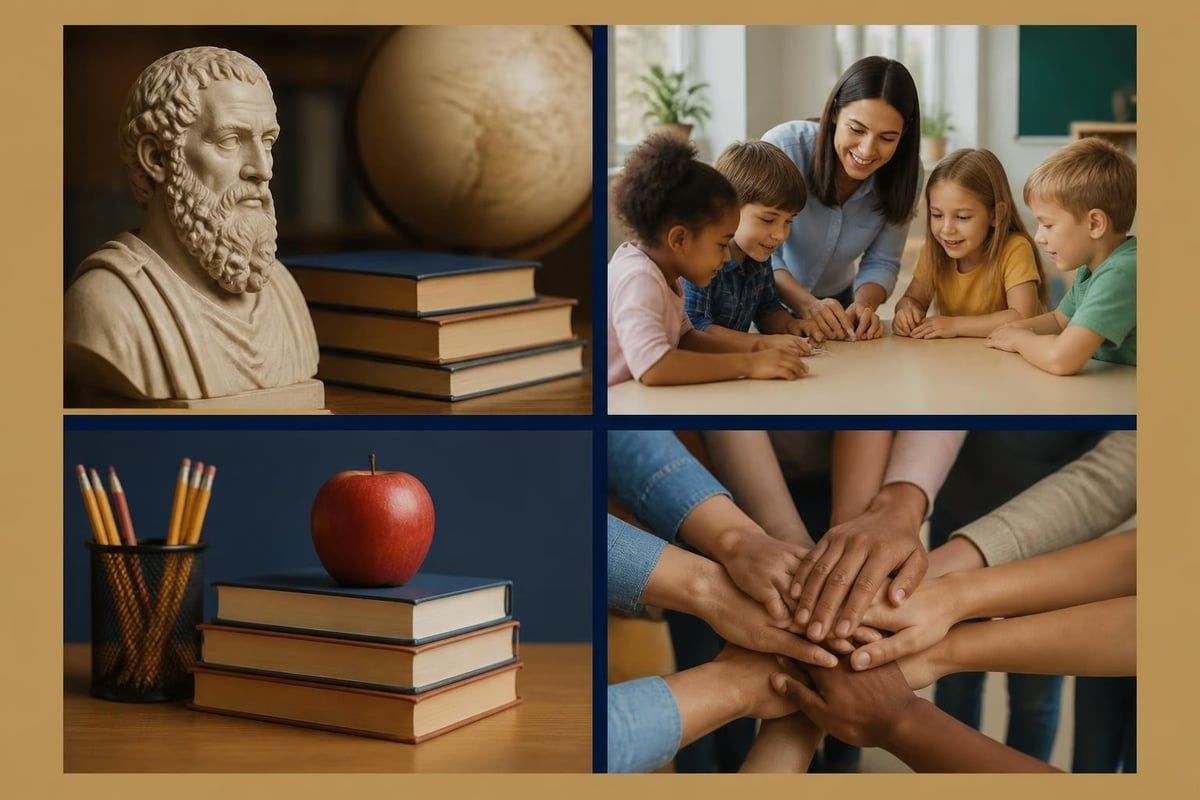
These philosophical foundations directly influence classroom management approaches, assessment methods, and instructional strategies. Teachers who understand their own philosophical orientation can make more intentional decisions about curriculum implementation and student engagement. According to comprehensive research on educational foundations, educators who articulate their teaching philosophy demonstrate stronger professional identity and more coherent instructional practice.
| Philosophy | Core Focus | Teaching Approach | Learning Emphasis |
| Perennialism | Timeless truths | Direct instruction | Critical thinking |
| Progressivism | Experience | Student-centered | Problem-solving |
| Essentialism | Core knowledge | Structured curriculum | Academic rigor |
| Social Reconstructionism | Social change | Project-based | Critical consciousness |
Pedagogical Foundations and Teaching Methods
Pedagogy represents the art and science of teaching, encompassing the methods, strategies, and techniques educators use to facilitate learning. The foundations of education require deep understanding of how students learn and how instructional approaches can be optimized for different contexts.
Learning Theories That Shape Instruction
Behaviorism, cognitivism, and constructivism form the three dominant learning theories influencing modern pedagogy. Behaviorism focuses on observable behaviors and reinforcement, making it effective for skill acquisition and habit formation. Cognitivism examines mental processes like memory, attention, and information processing, informing strategies for knowledge retention and transfer.
Constructivism posits that learners actively build understanding through experience and reflection. This theory has profoundly influenced project-based learning, inquiry approaches, and collaborative pedagogy.
Social learning theory adds another dimension, recognizing that students learn through observation, modeling, and social interaction. These theories aren't mutually exclusive; effective educators draw from multiple frameworks depending on learning objectives and student needs.
The foundations of teaching practice emphasize that pedagogical knowledge must be combined with content expertise and understanding of learners' developmental stages. This combination, known as pedagogical content knowledge, distinguishes expert teachers from novices.
Differentiated Instruction and Universal Design
Modern pedagogy recognizes that classrooms contain diverse learners with varying abilities, backgrounds, and learning preferences. Differentiated instruction responds to this reality by modifying content, process, product, or learning environment to meet individual needs.
- Content differentiation: Varying the complexity or format of learning materials
- Process differentiation: Providing multiple pathways for students to explore concepts
- Product differentiation: Offering choice in how students demonstrate understanding
- Environment differentiation: Adjusting physical or social learning conditions
Universal Design for Learning (UDL) takes differentiation further by proactively designing instruction that works for all students. UDL principles include multiple means of representation, expression, and engagement, reducing barriers rather than retrofitting accommodations.
Curriculum Design and Development
Curriculum represents what students should know and be able to do, serving as the blueprint for educational experiences. The foundations of education encompass understanding how curriculum is designed, organized, and implemented across grade levels and subject areas.
Curriculum Models and Frameworks
Subject-centered, learner-centered, and problem-centered curricula represent three major organizational approaches. Subject-centered curricula organize content around academic disciplines like mathematics, science, and language arts. This traditional model ensures systematic coverage of essential knowledge within each field.
Learner-centered curricula prioritize student interests, developmental needs, and individual learning goals. This approach often incorporates choice, personalization, and authentic connections to students' lives. Problem-centered curricula organize learning around real-world challenges or interdisciplinary themes, promoting critical thinking and application.
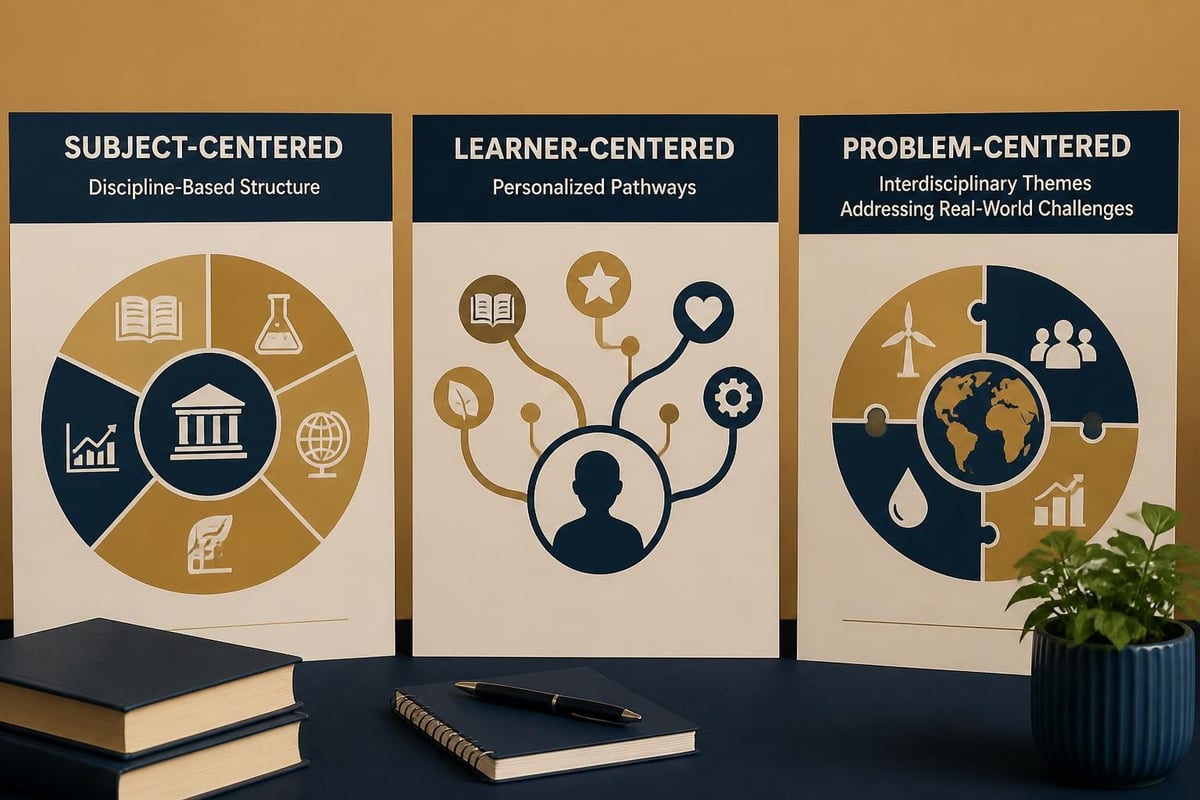
Educational policy frameworks increasingly emphasize standards-based curriculum design, where learning outcomes are explicitly defined and aligned with assessment. This backward design approach starts with desired results, then develops assessments and instruction to achieve those outcomes.
Curriculum mapping ensures coherence across grade levels, preventing gaps or unnecessary repetition. Vertical alignment tracks how concepts build from elementary through secondary education, while horizontal alignment ensures consistency across classrooms at the same grade level.
Assessment Strategies and Educational Measurement
Assessment forms a critical foundation of education, providing feedback to students, teachers, and educational systems. Understanding assessment types, purposes, and limitations enables educators to make evidence-based instructional decisions.
Formative and Summative Assessment
Formative assessment occurs during learning, providing ongoing feedback that informs instruction and helps students adjust their approach. Examples include exit tickets, classroom discussions, peer reviews, and draft critiques. The power of formative assessment lies in its immediacy and its focus on improvement rather than judgment.
Summative assessment evaluates learning at the conclusion of a unit or course, measuring achievement against standards. Final exams, standardized tests, capstone projects, and portfolios serve summative purposes. While summative assessments provide important accountability data, they offer limited opportunity for students to apply feedback.
Effective assessment systems balance both approaches, using formative data to guide instruction and summative measures to verify learning outcomes. Assessment literacy-understanding how to design, administer, and interpret assessments-represents an essential component of the foundations of education.
Alternative and Authentic Assessment
Moving beyond traditional tests, alternative assessments capture student learning through diverse formats:
- Performance tasks: Students demonstrate skills through real-world applications
- Portfolios: Collections of work showing growth and achievement over time
- Self-assessment: Students reflect on their learning and set goals
- Peer assessment: Collaborative evaluation developing critical thinking
- Digital badges: Micro-credentials documenting specific competencies
Authentic assessment connects classroom learning to real contexts, increasing engagement and transfer. Rather than recalling isolated facts, students apply knowledge to solve meaningful problems or create valuable products.
Technology Integration in Modern Education
Technology has fundamentally transformed the foundations of education, creating new possibilities for personalization, collaboration, and access while introducing challenges around equity, privacy, and digital literacy.
Educational Technology Frameworks
The SAMR model (Substitution, Augmentation, Modification, Redefinition) helps educators think critically about technology integration. At lower levels, technology simply substitutes for traditional tools. At higher levels, it enables learning experiences previously impossible.
The TPACK framework (Technological Pedagogical Content Knowledge) recognizes that effective technology use requires understanding the interplay between technology, pedagogy, and content. Teachers must select tools that enhance specific learning objectives rather than using technology for its own sake.
Digital learning environments, from learning management systems to adaptive platforms, now form part of educational infrastructure. These technologies enable personalized learning pathways that adapt to individual student needs, pacing, and preferences.
| Technology Level | SAMR Category | Educational Impact | Example Application |
| Basic replacement | Substitution | Minimal change | Digital worksheet instead of paper |
| Functional improvement | Augmentation | Some enhancement | Document with spell-check and comments |
| Task redesign | Modification | Significant change | Collaborative online editing |
| New possibilities | Redefinition | Transformation | Global project connecting multiple classrooms |
Artificial Intelligence in Education
Artificial intelligence represents the newest frontier in educational technology, with profound implications for the foundations of education. AI tools can automate administrative tasks, provide instant feedback, generate personalized learning resources, and offer insights through learning analytics.
For educators, developing AI literacy has become essential. Understanding how AI systems work, their capabilities and limitations, and their ethical implications allows teachers to use these tools responsibly and effectively. The AI Literacy Certification for Educators provides structured training in practical AI applications for lesson planning, assessment design, and feedback delivery, helping teachers integrate these powerful tools while maintaining pedagogical integrity.
AI-assisted teaching doesn't replace educator expertise; rather, it augments human capabilities. Teachers can use AI to generate differentiated materials, analyze student work patterns, or create formative assessments, freeing time for high-value interactions like mentoring, facilitating discussions, and building relationships.
Social and Cultural Foundations
Education never occurs in a vacuum. The foundations of education must account for social context, cultural diversity, and systemic inequities that shape learning opportunities and outcomes.
Equity, Diversity, and Inclusion
Educational equity means all students receive resources, support, and opportunities needed to succeed, recognizing that identical treatment doesn't produce equal outcomes. Culturally responsive teaching acknowledges students' cultural backgrounds as assets, incorporating diverse perspectives into curriculum and validating different ways of knowing.
Key equity considerations include:
- Access disparities: Differences in resources, technology, and qualified teachers
- Representation: Whose stories, contributions, and perspectives are centered
- Implicit bias: Unconscious attitudes affecting expectations and interactions
- Structural barriers: Policies and practices that systematically disadvantage certain groups
- Community engagement: Partnerships between schools and families
Research on educational foundations demonstrates that addressing these factors requires both individual educator development and systemic change in policies, practices, and resource allocation.
Sociology of Education
Understanding social structures, power dynamics, and institutional forces helps educators recognize how schools both reflect and shape society. Schools serve multiple functions: academic instruction, socialization, credentialing, childcare, and social sorting.
Critical examination of these functions reveals tensions in educational purpose. While education promotes individual opportunity, it also perpetuates existing hierarchies. While schools teach civic values, they may also reinforce conformity. Awareness of these dynamics enables educators to work intentionally toward more equitable and empowering outcomes.
Professional Development and Teacher Knowledge
The foundations of education extend to understanding teaching as a profession requiring ongoing growth, collaboration, and reflection. Static knowledge proves insufficient in a rapidly changing field.
Communities of Practice
Professional learning communities (PLCs) bring educators together to examine student work, share instructional strategies, and solve common challenges. These collaborative structures recognize that teaching expertise develops through collective inquiry rather than isolated practice.
Effective PLCs focus on student learning evidence, maintain a cycle of continuous improvement, and create cultures of trust where teachers can take risks and learn from mistakes. Research consistently shows that teachers in strong PLCs demonstrate more innovative practice and their students achieve better outcomes.
Reflective Practice and Growth Mindset
Reflective practice involves systematically examining one's teaching to understand what works, why it works, and how it might improve. Reflection moves beyond superficial evaluation ("that lesson went well") to deeper analysis of student thinking, instructional decisions, and underlying assumptions.
Adopting a growth mindset-believing that teaching ability develops through effort and learning rather than being fixed-helps educators embrace challenges and persist through difficulties. This mindset applies both to teachers' own professional development and to expectations for students.
The cycle of planning, teaching, assessing, and reflecting creates opportunities for continuous refinement. Teachers who engage in systematic reflection develop greater expertise, adaptability, and professional satisfaction.
Historical Context and Educational Reform
Understanding the foundations of education requires historical perspective on how educational systems evolved and how reform movements have shaped current practices.
Educational Reform Movements
Progressive education, civil rights-era desegregation, standards-based reform, and 21st-century skills movements have each left lasting marks on American education. These reforms reflect changing societal values, economic needs, and understandings of learning.
Current reform efforts emphasize competency-based education, where students progress by demonstrating mastery rather than accumulating seat time. Personalized learning uses technology and flexible structures to tailor instruction to individual students. Social-emotional learning recognizes that academic success requires emotional regulation, relationship skills, and self-awareness.
Contemporary educational issues like school choice, standardized testing, teacher evaluation, and funding equity continue generating debate about educational purpose and practice.
Lessons from Educational History
Historical analysis reveals patterns: educational innovations often promise transformation but produce modest changes; reforms frequently address symptoms rather than root causes; successful change requires attention to teacher development, community support, and systemic alignment.
Understanding this history prevents educators from repeating mistakes, provides perspective on current debates, and offers inspiration from past innovations. The foundations of education include learning from both successes and failures in educational practice.
Neuroscience and Learning
Emerging research in neuroscience offers new insights into how brains learn, though translating laboratory findings into classroom practice requires caution. The foundations of education increasingly incorporate evidence about memory, attention, emotion, and cognitive development.
Brain-Based Learning Principles
Several neuroscience findings have clear educational implications:
- Spaced practice: Distributing learning over time strengthens retention more than massing practice
- Retrieval practice: Actively recalling information enhances learning better than passive review
- Interleaving: Mixing different types of problems improves discrimination and transfer
- Elaboration: Connecting new information to existing knowledge creates stronger neural pathways
- Dual coding: Combining verbal and visual information enhances understanding
These evidence-based strategies help educators design more effective instruction, though they must be adapted thoughtfully to specific contexts and learners.
Developmental Considerations
Understanding cognitive, social, and emotional development helps educators set appropriate expectations and design developmentally responsive instruction. Young children think concretely and benefit from hands-on exploration. Adolescents develop abstract reasoning but also experience heightened emotional reactivity and social sensitivity.
Brain development continues into the mid-20s, with executive functions like planning, impulse control, and perspective-taking maturing gradually. Recognizing these developmental trajectories prevents both underestimating student potential and setting unrealistic expectations.
The foundations of education provide the essential knowledge base for effective teaching, encompassing philosophy, pedagogy, curriculum, assessment, technology, social context, and professional practice. As education continues evolving with artificial intelligence and digital transformation, these foundational principles remain crucial while adapting to new possibilities. Hadary Institute helps educators build on these foundations by developing practical AI literacy skills through professional certification programs that address lesson planning, assessment design, and ethical technology integration, ensuring teachers remain effective in rapidly changing educational landscapes.
Commercial Representative - OpenSemsem Ltd.
128 City Road, London EC1V 2NX, United Kingdom
Phone number: +44 750 2843 500
128 City Road, London EC1V 2NX, United Kingdom
Phone number: +44 750 2843 500
Copyright © 2026
Created with