Before attempting to sign in, you need to understand what Google Classroom requires for authentication. The platform operates exclusively through Google accounts, which means you must have valid Google credentials to access any classroom.
Educational institutions typically provide students and teachers with Google Workspace for Education accounts. These accounts end with your school's domain rather than @gmail.com. Personal accounts can also access Google Classroom, but institutional accounts offer additional administrative controls and security features.
Your google classroom account sign in credentials include:
- A valid email address (either institutional or personal Gmail)
- A secure password associated with that account
- Two-factor authentication codes (if enabled)
- Proper permissions granted by your institution's administrator

New users often find the initial google classroom account sign in process straightforward, but understanding each step prevents confusion. The process varies slightly depending on whether you're using a computer, tablet, or smartphone.
Navigate to
classroom.google.com in your preferred web browser. You'll be prompted to sign in if you're not already logged into a Google account. Enter your email address or phone number in the first field, then click "Next."
After entering your email, the system prompts you for your password. Type it carefully, as passwords are case-sensitive. If you've enabled two-factor authentication, you'll receive a verification code via text message or authenticator app.
Once authenticated, you'll see your Classroom dashboard. First-time users may see an empty screen with options to join or create a class. Students typically receive a class code from their teacher, while educators can create new classrooms immediately.
The Google Classroom mobile app offers convenient access from
iOS and
Android devices. Download the official app from your device's app store, then tap to open it. The app automatically detects Google accounts already signed in on your device.
If multiple accounts exist on your phone, you'll see a list to choose from. Select the appropriate account for your classroom access. For guidance on the student sign-in process,
CustomGuide's tutorial provides detailed visual instructions.
The mobile experience differs slightly from desktop, with touch-optimized navigation and push notifications for class updates. However, the core google classroom account sign in authentication process remains identical across all platforms.
Educators and students frequently juggle multiple Google accounts, leading to sign-in complications. You might have a personal Gmail account, an institutional education account, and perhaps accounts from previous schools or districts.
| Account Type |
Primary Use |
Sign In Considerations |
| Institutional |
School classes, official communication |
Requires administrator approval |
| Personal Gmail |
Personal classes, tutoring |
Full control over settings |
| Multiple Institutional |
Previous schools, dual enrollment |
May cause automatic sign-in conflicts |
| Google Workspace |
Professional development, private tutoring |
Business-tier features available |
Switching between accounts requires careful attention to which profile you're currently using. Chrome and other browsers display your account profile picture in the upper-right corner. Clicking this icon reveals all signed-in accounts and allows quick switching without re-entering credentials.
For educators managing both personal and professional development activities, maintaining separate browser profiles prevents accidental cross-posting or privacy issues. This approach particularly benefits those engaging with platforms like Hadary Institute, where professional learning occurs alongside daily classroom management.
Even with correct credentials, users occasionally encounter barriers during the google classroom account sign in process. Understanding these common issues saves time and frustration.
Forgotten passwords represent the most frequent login obstacle. Use Google's password recovery system by clicking "Forgot password?" on the sign-in screen. You'll need access to your recovery email address or phone number to reset your password.
Incorrect email format causes confusion, especially for new students. Institutional accounts require the full email address including the domain (e.g., student@schoolname.edu), not just a username. Double-check that you're typing the complete email address.
Sometimes users experience authentication failures even with correct credentials. If you encounter this, CodeHS provides troubleshooting steps for resolving persistent login problems, including clearing browser cache and checking permission settings.
Outdated browsers create unexpected sign-in difficulties. Google Classroom works best with current versions of Chrome, Firefox, Safari, and Edge. Update your browser regularly to ensure compatibility with Google's security protocols.
- Clear cookies and cache if sign-in loops occur
- Disable browser extensions that might interfere with authentication
- Try incognito or private browsing mode to rule out extension conflicts
- Ensure JavaScript is enabled in your browser settings
- Check that third-party cookies aren't blocked
Device-specific issues occasionally prevent access. Mobile devices require the official Google Classroom app for optimal functionality, though mobile browsers can access the platform in a limited capacity. Tablets offer a hybrid experience between phone and desktop interfaces.
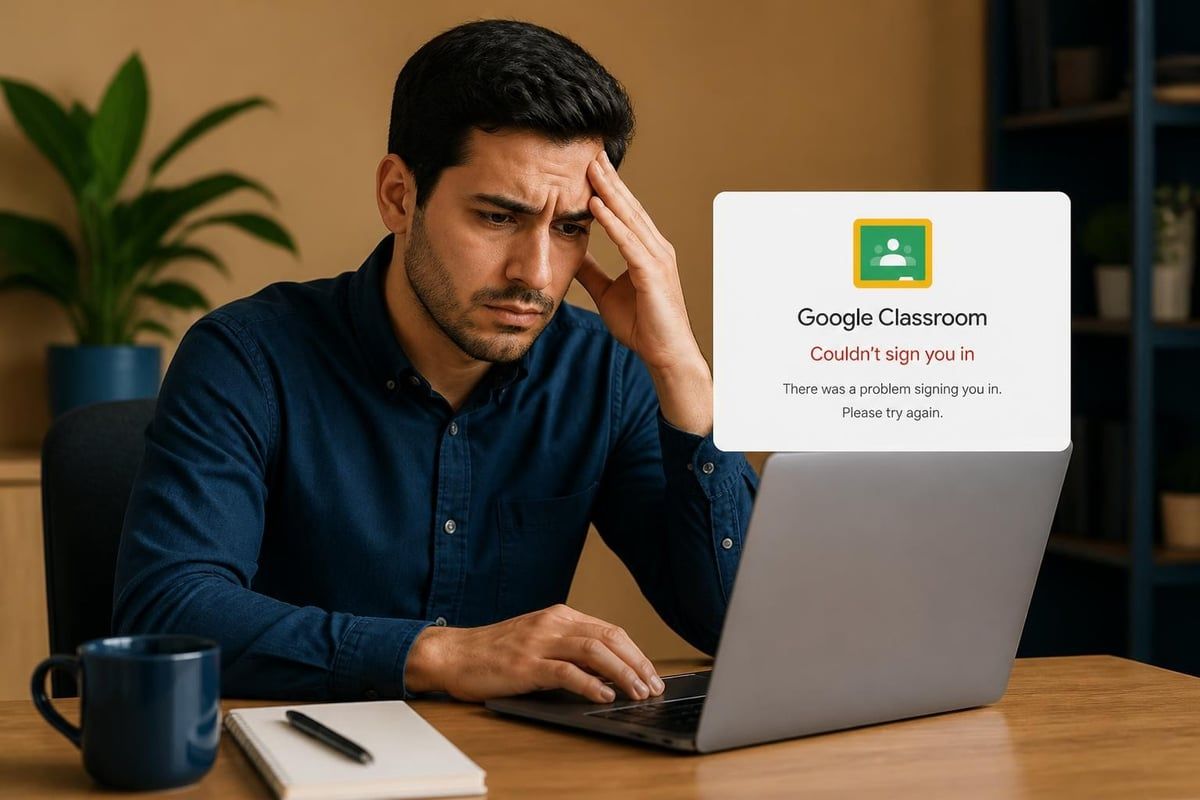
Your ability to complete google classroom account sign in successfully depends partly on permissions set by administrators. Educational institutions implement various security measures that affect login capabilities.
School IT departments configure Google Workspace settings that determine who can access Classroom and how. Some institutions restrict access to on-campus networks or require VPN connections for remote access. Others limit sign-in attempts or require specific device types.
Account suspension prevents login entirely until administrators restore access. This typically occurs due to policy violations, extended absences, or graduation. Contact your school's IT helpdesk if you receive messages indicating your account is disabled or suspended.
Age restrictions also apply under COPPA (Children's Online Privacy Protection Act) regulations. Students under 13 require parental consent and may experience additional login verification steps.
Corporate or school firewalls sometimes block Google services. If you're attempting to sign in from a restricted network, you might see error messages or infinite loading screens. Network administrators can whitelist classroom.google.com and related Google domains to resolve this.
Public Wi-Fi networks occasionally interfere with secure authentication protocols. Use trusted networks when possible, or consider a VPN for secure access from public locations. During widespread service disruptions, such as the Google services outage that affected login functionality across platforms, patience is the only solution while Google resolves infrastructure issues.
Security should be a priority when accessing educational platforms containing student data and academic materials. Strengthening your google classroom account sign in security protects both personal information and institutional resources.
Enable two-factor authentication (2FA) through your Google account security settings. This adds an extra verification step beyond your password, significantly reducing unauthorized access risks.
Authentication methods include:
- Text message codes sent to your registered phone
- Google Authenticator app generating time-based codes
- Security keys (physical USB devices)
- Backup codes for emergency access
- Prompt notifications on trusted devices
While 2FA adds seconds to your login process, the security benefits far outweigh this minor inconvenience. For educators handling sensitive student information, 2FA isn't optional-it's essential professional practice.
Create strong, unique passwords for your Google account. Avoid common words, birthdays, or sequential numbers. Password managers help generate and store complex passwords securely.
Change your password immediately if you suspect unauthorized access. Google sends security alerts when unusual sign-in activity occurs, such as logins from new locations or devices. Never ignore these warnings.
Regular security checkups through Google's account settings reveal active sessions, connected devices, and recent activity. Review this information monthly to ensure all access is authorized. The characteristics of an effective educator include attention to digital security and privacy protection for themselves and their students.
The google classroom account sign in experience varies depending on whether you're a teacher, student, or parent/guardian. Each role has specific access patterns and common workflows.
Educators typically sign in multiple times daily to post assignments, review student work, and communicate with classes. Consider staying signed in on trusted devices to streamline this workflow, but always log out from shared or public computers.
Teachers managing multiple classes benefit from organizing their Classroom dashboard efficiently. Pin frequently accessed classes or use the calendar view to see upcoming deadlines across all courses simultaneously.
As educational technology evolves, teachers need to expand their digital literacy beyond basic platform navigation. The AI Literacy Certification for Educators helps educators develop practical AI skills for lesson planning and assessments while maintaining secure, ethical classroom practices in digital environments.
Students sign in primarily to view assignments, submit work, and check grades. Many students access Classroom exclusively through mobile devices, making app familiarity crucial.
First-time student sign-in often requires a class code provided by the teacher. Once entered, the class appears permanently on the student's dashboard. Students should verify they've joined the correct class by checking the teacher name and subject before participating.
Parent accounts access student information without direct google classroom account sign in capabilities. Instead, parents receive email summaries of student activity when teachers enable this feature. This design protects student privacy while keeping families informed.
Understanding the technical infrastructure supporting Google Classroom authentication helps troubleshoot issues more effectively. The login system leverages Google's broader identity management platform.
Google Classroom uses OAuth 2.0 for secure authentication. This industry-standard protocol allows third-party applications to access Google services without exposing user passwords. When you sign in, you're actually authenticating with Google's central identity system, which then grants Classroom access to your account data.
Research into login process bugs in Android applications reveals common authentication vulnerabilities that Google works continuously to address. Regular security updates patch potential exploits before they affect users.
After successful google classroom account sign in, your browser maintains a session token that proves your identity for subsequent requests. These tokens expire after a set period or when you explicitly sign out.
| Session Feature |
Purpose |
Duration |
| Active token |
Maintains current login |
14 days of inactivity |
| Refresh token |
Renews expired sessions |
6 months maximum |
| Security checkpoint |
Re-verification for sensitive actions |
Immediate |
| Remember device |
Skip 2FA on trusted devices |
Until manually removed |
Session hijacking represents a security concern if you access Classroom on shared devices. Always sign out completely rather than simply closing the browser window, which may leave your session active for the next user.
Modern educators and students access Google Classroom from various devices throughout the day. Each platform offers unique advantages and occasional limitations regarding the google classroom account sign in process.
Changes made in Classroom sync instantly across devices. Submit an assignment on your phone, and it appears immediately when you check your laptop. This real-time synchronization depends on successful authentication across all devices using the same account.
Device-specific features vary slightly. The desktop browser version offers the most complete functionality, including advanced grading tools and detailed analytics. Mobile apps prioritize quick access to assignments and notifications but may require switching to a browser for complex tasks.
For visual learners who prefer video instruction, resources like this sign-in tutorial demonstrate the process using a new Gmail account, while this guide shows how to properly sign out when managing multiple accounts.
Windows, macOS, Chrome OS, iOS, and Android all support Google Classroom access, but the authentication flow adapts to each platform's security model.
Chrome OS devices offer the smoothest experience since they're built around Google accounts. Sign in once to the device itself, and Classroom access is automatic. This integration makes Chromebooks popular in educational settings.
iOS devices require the Google Classroom app from the App Store. Apple's strict app sandboxing means each Google app maintains separate authentication, so you might need to sign in to Classroom even if you're already signed into Gmail.
Successful long-term use of Google Classroom requires more than a single google classroom account sign in. Educators and students must maintain reliable access across semesters, breaks, and transitions.
At the beginning of each school year, verify your account credentials still work before classes begin. Many institutions reset passwords or modify permissions during summer breaks, potentially causing first-day access problems.
Mid-year transitions like changing schools or graduating require planning. Export important assignments and materials before your institutional account becomes disabled. Google Takeout allows downloading all Classroom data for personal archives.
Understanding foundations of education includes recognizing how digital access affects educational equity. Some students lack reliable internet or devices at home, making in-class access to Classroom crucial for their success.
Holiday breaks and summer vacations may affect account access policies. Some schools disable student accounts during extended breaks, while others maintain year-round access. Check with your IT department about access schedules to avoid surprises.
Teachers planning summer professional development through platforms like
Hadary Institute's courses should use personal Google accounts rather than institutional ones that might be restricted during breaks.
Beyond standard login procedures, certain situations require special approaches to google classroom account sign in success.
Multiple failed login attempts trigger Google's security lockout mechanism. If you're locked out, wait 24 hours before attempting to sign in again, or use Google's account recovery process to verify your identity through alternate means.
Account recovery requires previously configured backup options like recovery email addresses or phone numbers. Without these, regaining access becomes significantly more difficult, potentially requiring administrator intervention.
Former students or teachers attempting to access old classes encounter unique challenges. Archived classes remain viewable but become read-only, and some institutions delete them after a retention period expires.
Maintain personal backups of important work to ensure long-term access regardless of Classroom availability. The platform serves as an active learning environment, not a permanent digital filing system.
Some classrooms allow observers or co-teachers with limited permissions. These roles require standard google classroom account sign in procedures but may restrict certain actions like grading or posting announcements.
Parent access differs entirely from student access. Parents receive email summaries configured by teachers rather than direct Classroom login. This design protects student privacy while maintaining family engagement.
Successfully navigating the google classroom account sign in process enables seamless access to one of education's most powerful digital platforms. By understanding authentication requirements, troubleshooting common issues, and implementing security best practices, educators and students can focus on learning rather than technical obstacles. As education continues to evolve with AI-powered tools and digital resources, Hadary Institute provides educators with the skills to confidently integrate technology into their teaching practice while maintaining secure, ethical classroom environments that prepare students for the future.