Learning skills represent the cognitive and metacognitive abilities that enable individuals to acquire, process, retain, and apply new information effectively. These competencies extend far beyond memorization or passive consumption of content. They encompass critical thinking, self-regulation, adaptive problem-solving, and the capacity to transfer knowledge across different contexts.
The modern educational environment demands a sophisticated understanding of how people learn. Research in cognitive science continues to refine our understanding of memory consolidation, spaced repetition, and the role of emotional engagement in deep learning. For educators specifically, developing strong learning skills creates a multiplier effect, as their enhanced capabilities directly benefit the students they serve.
Effective learning skills rest on four interconnected pillars that support sustainable growth and development:
- Metacognitive awareness: Understanding your own thinking processes and learning preferences
- Strategic planning: Setting clear objectives and designing pathways to achieve them
- Active engagement: Participating deeply with material rather than passive consumption
- Reflective practice: Regularly evaluating progress and adjusting approaches
These pillars work together to create a robust framework for continuous improvement. Metacognitive awareness helps learners identify their strengths and weaknesses, while strategic planning transforms that awareness into actionable steps. Active engagement ensures meaningful interaction with new concepts, and reflective practice closes the loop by providing feedback for future iterations.

The integration of artificial intelligence into education has fundamentally altered how educators approach skill development. AI tools offer personalized learning pathways, instant feedback mechanisms, and sophisticated analytics that were previously impossible to implement at scale. Understanding how to leverage these capabilities while maintaining pedagogical integrity represents a crucial learning skill for 2026's educators.
Practical AI literacy has emerged as an essential component of professional competency. Educators who develop strong learning skills in this domain position themselves to enhance lesson planning, create more effective assessments, and provide targeted feedback with unprecedented efficiency. The
AI Literacy Certification for Educators program addresses this need through structured modules that combine theoretical understanding with hands-on application, enabling teachers to integrate AI tools responsibly into their practice.
Creating a sustainable system for skill development requires intentional design and consistent execution. The most effective learners construct personalized frameworks that align with their professional responsibilities and learning preferences.
| System Component |
Purpose |
Implementation Example |
| Input channels |
Curate quality learning sources |
Subscribe to education journals, join professional networks, attend webinars |
| Processing methods |
Transform information into understanding |
Take structured notes, create concept maps, teach others |
| Application opportunities |
Practice new skills in context |
Design lesson plans, pilot new approaches, seek feedback |
| Review cycles |
Reinforce and refine learning |
Weekly reflection sessions, monthly skill assessments |
This systematic approach prevents the common pitfall of consuming vast amounts of information without meaningful integration. Each component serves a specific purpose in the learning cycle, creating multiple touchpoints that strengthen neural pathways and deepen understanding.
The gap between knowing what effective learning skills look like and actually developing them often comes down to practical implementation. Several evidence-based strategies have proven particularly effective for busy educators seeking to enhance their capabilities while managing demanding schedules.
Dedicating uninterrupted time blocks to focused learning produces significantly better results than scattered, multitasking attempts. Research suggests that 90-minute sessions with scheduled breaks optimize cognitive performance and retention. During these blocks, eliminating digital distractions and creating a conducive environment maximizes the return on invested time.
Many educators find early morning hours ideal for skill development, before the demands of the school day begin. Others prefer evening sessions when they can reflect on the day's experiences and connect new learning to practical challenges they encountered.
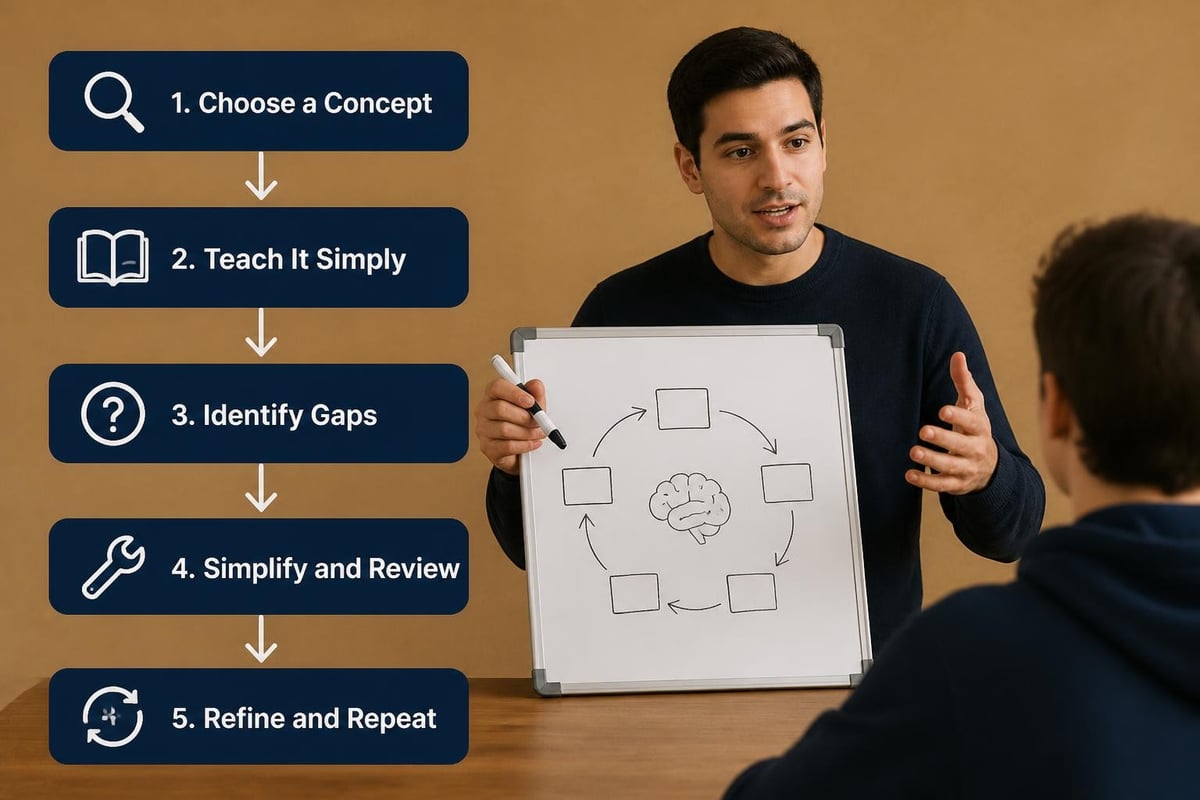
Named after physicist Richard Feynman, this approach tests and strengthens understanding through simplified explanation:
- Choose a concept you want to master
- Explain it in simple terms as if teaching a novice
- Identify gaps in your explanation where understanding breaks down
- Return to source materials to fill those gaps
- Refine your explanation until it flows naturally
This technique proves especially valuable when developing learning skills related to complex subjects like AI integration in education. The act of simplification forces genuine understanding rather than surface-level familiarity.
Even with strong intentions and well-designed systems, learners inevitably encounter obstacles that threaten progress. Recognizing these challenges and developing strategies to address them represents an important meta-skill that supports long-term development.
Most skill development follows a predictable pattern: rapid initial progress followed by frustrating plateaus where improvement seems to stall. This phenomenon occurs because early gains come from mastering fundamental concepts, while later progress requires refining subtleties and integrating multiple competencies.
Understanding that plateaus are normal and temporary helps maintain motivation during these challenging periods. Rather than abandoning efforts, successful learners use plateaus as opportunities to revisit foundations, explore adjacent skills, or seek mentorship from those who have progressed further.
The abundance of available learning resources in 2026 creates a paradox where access to everything can lead to mastery of nothing. Effective learners develop curation skills that help them distinguish high-value resources from noise.
Key filtering criteria include:
- Relevance to current goals: Does this resource directly support your stated learning objectives?
- Source credibility: Is the creator recognized for expertise in this domain?
- Practical applicability: Can you implement insights within your current role?
- Time efficiency: Does the format respect your available learning time?
Applying these criteria ruthlessly prevents the common trap of bookmark hoarding without actual engagement. The characteristics of an educator who succeeds in continuous learning include the discipline to say no to attractive but ultimately distracting opportunities.
Learning skills development lacks the clear endpoints and external validation that formal education provides. This ambiguity makes self-assessment and progress tracking essential for sustained motivation and strategic course correction.
Effective measurement balances quantitative indicators with qualitative reflections. Consider tracking multiple dimensions of progress:
| Metric Type |
Examples |
Assessment Frequency |
| Input metrics |
Hours dedicated to learning, resources consumed, courses completed |
Weekly |
| Process metrics |
Concepts mastered, skills practiced, connections made |
Monthly |
| Output metrics |
New capabilities applied, problems solved, teaching improvements |
Quarterly |
| Impact metrics |
Student outcomes, peer recognition, professional opportunities |
Annually |
This multi-layered approach provides both short-term feedback that maintains motivation and long-term perspective that validates the investment. Input metrics offer immediate satisfaction, while impact metrics confirm that learning translates to meaningful professional growth.
Social accountability dramatically increases the likelihood of achieving learning goals. Sharing commitments with trusted colleagues, joining professional learning communities, or working with a mentor creates external pressure that supplements internal motivation.
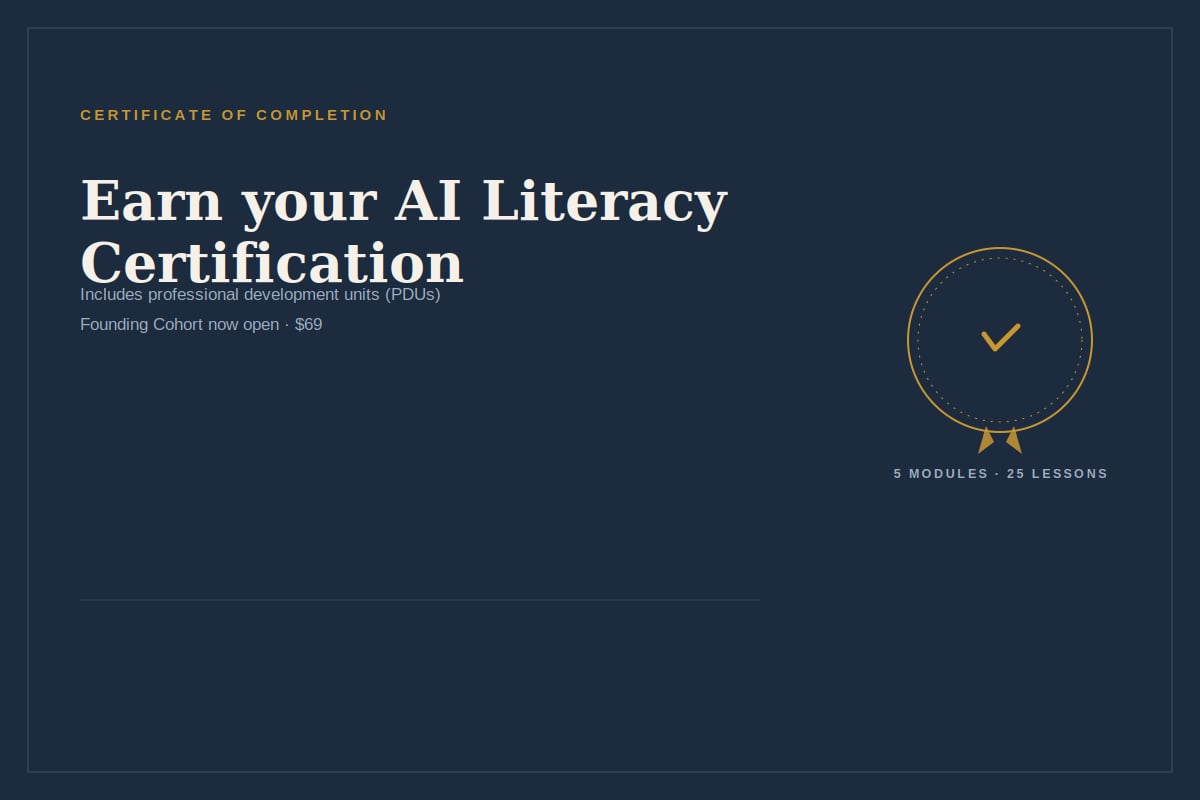
Many educators find that participating in structured programs provides the accountability framework they need. Formal courses with deadlines, peer interaction, and certification milestones create natural checkpoints that prevent procrastination and maintain forward momentum. Resources available through
Hadary Institute demonstrate how structured programs can accelerate skill development while providing community support.
The ultimate test of any learning skill is its integration into regular professional practice. Knowledge that remains theoretical provides limited value compared to capabilities that enhance daily teaching effectiveness.
Rather than viewing skill development as separate from work, effective educators embed learning into their existing workflows. This micro-learning approach identifies small opportunities throughout the day for skill application and refinement.
Examples include:
- Testing a new AI prompt technique while creating tomorrow's lesson plan
- Practicing active listening skills during student conferences
- Applying metacognitive strategies when planning curriculum units
- Experimenting with feedback frameworks in real assessment situations
These integrated moments compound over time, producing substantial capability gains without requiring separate dedicated time blocks. The key is maintaining awareness of current learning objectives so you recognize application opportunities as they arise.
Consistent reflection transforms experience into expertise. Without deliberate processing, educators may repeat the same practices for years without meaningful improvement. Structured reflection rituals create space for extracting insights and planning adjustments.
A simple but powerful reflection framework asks three questions:
- What worked well this week in my practice?
- What challenges did I encounter, and what might address them?
- What specific skill will I focus on developing next week?
Recording these reflections builds a valuable personal knowledge base that tracks growth over time. Reviewing past entries reveals patterns, celebrates progress, and provides perspective during difficult periods.
Once foundational learning skills are established, educators can employ more sophisticated techniques that accelerate capability development and deepen expertise.
Psychologist Anders Ericsson's research on expert performance identified deliberate practice as the key differentiator between good and exceptional practitioners. Unlike routine practice that reinforces existing skills, deliberate practice involves:
- Focused attention on specific skill components rather than general practice
- Immediate feedback on performance quality
- Repetition with variation to build adaptability
- Operating at the edge of current ability where mistakes are likely but learning is maximal
For educators developing AI integration skills, this might mean repeatedly practicing prompt engineering with specific feedback on output quality, gradually increasing complexity as proficiency grows. The structured approach offered through professional development courses provides the feedback mechanisms necessary for deliberate practice.
Exceptional learners develop the ability to recognize patterns and principles that transcend specific contexts. This transfer capability allows knowledge from one domain to accelerate learning in seemingly unrelated areas.
A teacher who develops strong learning skills in educational technology might recognize that the same principles of iterative design, user feedback, and continuous improvement apply to curriculum development. This recognition allows faster skill acquisition because foundational mental models already exist.
Actively seeking these connections strengthens neural pathways and creates a more integrated knowledge structure. When studying any new skill, ask yourself: "What does this remind me of? Where else have I seen similar patterns? How might this principle apply in different contexts?"
Developing strong learning skills creates compounding returns throughout an educator's career, enabling continuous adaptation to changing educational landscapes while maintaining teaching excellence. The strategies and frameworks outlined here provide practical pathways for building these essential competencies in 2026's AI-enhanced educational environment. Hadary Institute supports educators in this journey through structured professional development that combines theoretical foundations with practical application, helping teachers become AI-ready while strengthening the core learning skills that drive long-term professional growth.