Machine learning algorithms analyze patterns in student data to identify learning gaps, predict outcomes, and recommend interventions before students fall behind. These systems process millions of data points-from quiz responses to engagement metrics-creating a comprehensive picture of each learner's journey.
At its core, machine learning in education enables platforms to adjust content difficulty based on real-time performance. When a student struggles with algebraic concepts, the system automatically provides additional practice problems at a suitable difficulty level. Conversely, advanced learners receive challenging material that keeps them engaged.
Key components of adaptive systems include:
- Real-time performance tracking across multiple subject areas
- Dynamic content adjustment based on mastery levels
- Predictive analytics for early intervention strategies
- Personalized pacing that respects individual learning speeds
- Multi-modal content delivery matching learning preferences
The sophistication of these systems has grown exponentially since 2024, with current platforms processing contextual clues like time spent on tasks, error patterns, and even emotional indicators through engagement metrics.

Insight TypeTeachers now access dashboards that translate complex machine learning outputs into actionable insights. These interfaces highlight which students need additional support, which concepts require re-teaching, and which instructional strategies prove most effective for specific learning objectives.
| Insight Type |
Traditional Method |
ML-Enhanced Method |
Time Saved |
| Identifying struggling students |
Weekly grade reviews |
Real-time alerts |
5-7 hours/week |
| Curriculum gap analysis |
End-of-unit assessments |
Continuous monitoring |
3-4 hours/week |
| Intervention planning |
Manual data compilation |
Automated recommendations |
4-6 hours/week |
| Parent communication prep |
Individual record review |
Generated summaries |
2-3 hours/week |
This transformation allows educators to focus energy on high-value activities like mentorship, creative lesson design, and building meaningful student relationships rather than drowning in administrative paperwork.
The integration of machine learning and education extends far beyond adaptive quizzes. Educators across disciplines are discovering innovative applications that enhance their core teaching responsibilities while maintaining the human elements essential to effective instruction.
Automated grading systems powered by machine learning have evolved to evaluate complex responses, including essay writing and problem-solving processes. These tools analyze not just final answers but the reasoning pathways students employ, providing detailed feedback that helps learners understand their mistakes.
Modern assessment systems offer:
- Natural language processing for essay evaluation
- Step-by-step problem-solving analysis in mathematics
- Immediate feedback delivery without teacher delay
- Consistency in grading criteria application
- Detailed rubric-based scoring with explanatory comments
- Plagiarism detection and originality verification
Machine learning applications in education now extend to formative assessment throughout the learning process, not just summative evaluation at the end. This continuous feedback loop helps students correct misunderstandings before they become entrenched, significantly improving learning outcomes.
Similar to how streaming services suggest movies, educational platforms recommend learning resources tailored to individual needs. A student struggling with cellular biology might receive video explanations, interactive simulations, and practice questions specifically targeting their misconceptions.
These recommendation engines consider factors including learning style preferences, past performance patterns, engagement history, time of day productivity peaks, and complementary skill development needs. The result is a curated learning experience that feels personally designed for each student while remaining scalable across entire school districts.

Successfully integrating machine learning and education requires thoughtful planning, professional development, and change management. Educational leaders must balance technological capabilities with pedagogical principles, ensuring that AI tools enhance rather than replace human instruction.
The most sophisticated machine learning tools fail without educators who understand their capabilities and limitations. Professional development programs must address both technical literacy and pedagogical applications, helping teachers become confident AI users while maintaining their instructional autonomy.
Effective training programs cover prompt engineering for AI assistants, data interpretation from learning analytics platforms, ethical considerations in algorithmic decision-making, integration strategies for existing curricula, and student privacy protection protocols. Educators who complete comprehensive AI literacy programs report increased confidence in leveraging technology while maintaining their essential role as learning facilitators.
The
AI Literacy Certification for Educators equips teachers with practical skills to implement machine learning tools responsibly in their classrooms, covering everything from lesson planning to assessment design through hands-on activities and reusable templates.
Not every machine learning application suits every educational context. Leaders must evaluate tools based on alignment with learning objectives, evidence of effectiveness from peer-reviewed research, data privacy and security measures, integration capabilities with existing systems, and total cost of ownership including training and support.
| Evaluation Criterion |
Questions to Ask |
Red Flags |
| Pedagogical Alignment |
Does this support our teaching philosophy? |
Generic features without educational grounding |
| Evidence Base |
What research supports claimed outcomes? |
Marketing claims without peer-reviewed studies |
| Privacy Protection |
How is student data collected, stored, used? |
Vague privacy policies or data monetization |
| Teacher Agency |
Does this empower or replace teacher judgment? |
Black-box systems with no transparency |
| Equity Considerations |
Does this work for all student populations? |
Performance gaps across demographic groups |
Successful implementation teams include classroom teachers, instructional technology specialists, data privacy officers, curriculum coordinators, and student representatives to ensure multiple perspectives inform decision-making.
The intersection of machine learning and education raises important questions about algorithmic bias, data privacy, equity of access, and the appropriate role of automation in human-centered processes. Educators must navigate these challenges thoughtfully to realize the benefits while minimizing potential harms.
Machine learning systems learn from historical data, potentially perpetuating existing inequities if that data reflects biased practices. An algorithm trained on historical disciplinary records might flag certain student populations for intervention more frequently, reinforcing discriminatory patterns rather than addressing root causes.
Strategies for bias mitigation include:
- Regular audits of algorithmic outputs across demographic groups
- Diverse development teams building educational AI tools
- Transparent documentation of training data sources and limitations
- Human oversight requirements for high-stakes decisions
- Continuous monitoring of outcome disparities
Research examining machine learning techniques in educational contexts emphasizes the importance of extending traditional ML lifecycles to incorporate educational principles and equity considerations throughout development and deployment.
The data collection enabling personalized learning also creates privacy risks. Educational institutions must balance the benefits of data-driven instruction with obligations to protect sensitive information about minors.
Comprehensive privacy frameworks establish clear policies about what data is collected and why, how long information is retained and when it's deleted, who can access student data and under what circumstances, how data is secured against breaches, and parental rights to review and request deletion.
Foundations of education emphasize the ethical responsibilities educators hold toward their students, principles that extend to technological implementations and data stewardship practices.
The landscape of machine learning and education continues evolving rapidly, with several promising developments on the horizon that could further transform teaching and learning experiences.
Next-generation systems analyze multiple data streams simultaneously-text responses, video of student work processes, audio recordings of collaborative discussions, and biometric indicators of engagement. This holistic approach provides richer insights into learning processes than any single data source.
These advanced analytics help educators understand not just what students know but how they think, approach problems, and collaborate with peers. The combination creates opportunities for truly personalized feedback addressing both content mastery and metacognitive skill development.
Intelligent tutoring systems now engage students in Socratic dialogue, asking probing questions rather than simply providing answers. These systems guide learners toward discoveries, supporting the constructivist approaches that research identifies as highly effective for deep learning.
The latest tutoring platforms understand context from previous interactions, adjust their communication style to match student preferences, recognize when frustration requires encouragement versus when challenge promotes growth, and seamlessly hand off to human teachers when situations exceed their capabilities.
As machine learning tools become more accessible and affordable, smaller school districts and under-resourced institutions gain access to capabilities previously available only to well-funded programs. This democratization has profound equity implications, potentially narrowing achievement gaps rather than widening them.
Open-source educational AI projects, cloud-based platforms with flexible pricing, and collaborative development initiatives across institutions all contribute to broader access. The exploration of machine learning in K-12 education highlights opportunities for introducing these concepts early, preparing all students for AI-augmented futures.
The successful integration of machine learning and education depends ultimately on educator readiness, not just technological capability. Teachers need ongoing support to develop competencies, adapt pedagogical approaches, and maintain confidence as technology reshapes their profession.
Beyond basic digital literacy, today's educators benefit from understanding machine learning fundamentals without requiring technical expertise, skills in evaluating AI tool outputs critically, ability to explain algorithmic decisions to students and parents, strategies for maintaining human connection in technology-rich environments, and commitment to continuous learning as tools evolve.
Professional learning communities focused on AI integration allow educators to share experiences, troubleshoot challenges, and develop collective expertise. These communities prove particularly valuable for addressing the characteristics of an educator in an age where technological fluency joins traditional pedagogical skills as essential qualifications.
While machine learning handles routine tasks efficiently, educators must recognize situations requiring human judgment, empathy, and creativity. The goal is not replacing teachers but augmenting their capabilities, freeing time for the irreplaceable human elements of education.
Tasks well-suited for automation:
- Grading multiple-choice and short-answer assessments
- Tracking assignment completion and participation
- Generating initial feedback on common errors
- Organizing and categorizing learning resources
- Monitoring progress toward learning objectives
Tasks requiring human expertise:
- Interpreting student emotional states and providing support
- Facilitating complex discussions about controversial topics
- Making nuanced judgments about exceptional circumstances
- Building relationships that motivate and inspire students
- Designing creative learning experiences that spark curiosity
Understanding this distinction helps educators leverage machine learning and education tools effectively while maintaining their irreplaceable role at the center of the learning experience.
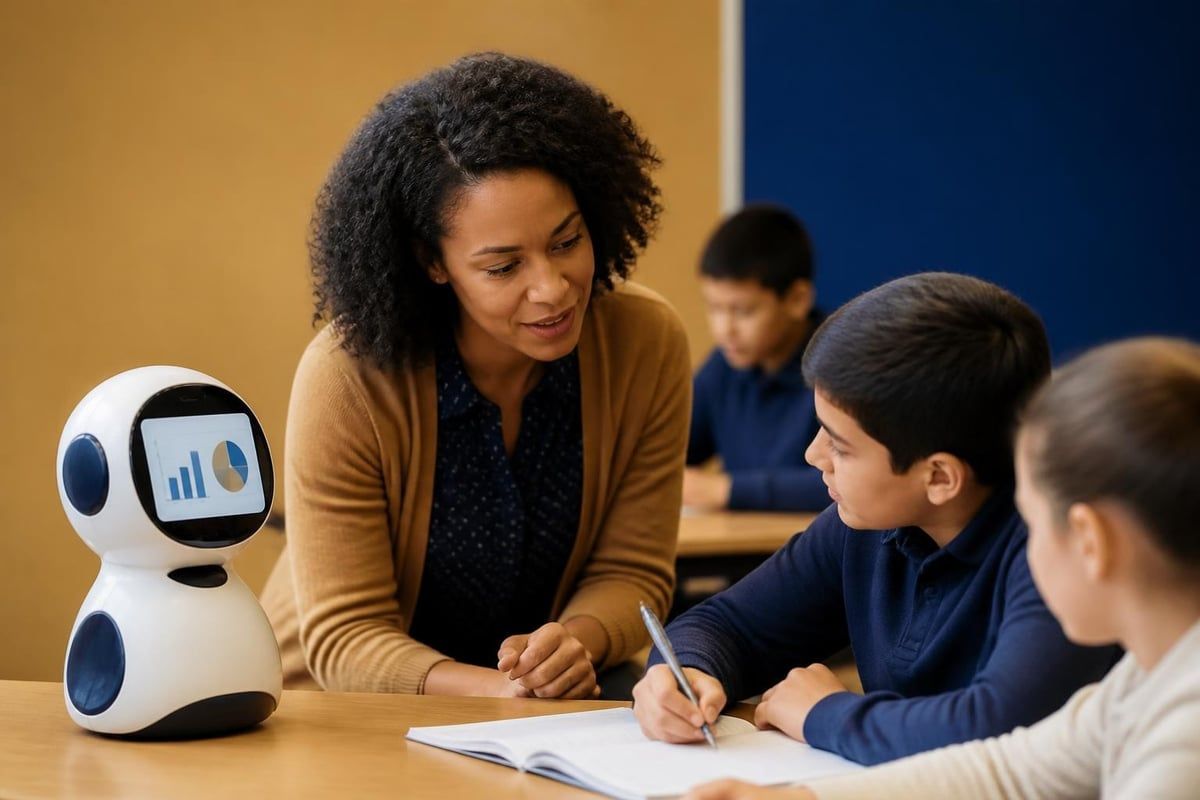
Implementing machine learning tools represents significant investment of resources and effort. Educational leaders need frameworks for evaluating impact, ensuring that technological additions genuinely improve outcomes rather than simply adding complexity.
Effective evaluation examines multiple dimensions including student learning outcomes across standardized and authentic assessments, engagement metrics showing participation and time-on-task improvements, efficiency gains in teacher workload and administrative processes, equity indicators tracking performance across demographic groups, and satisfaction measures from students, teachers, and families.
Comparing outcomes before and after implementation while controlling for confounding variables provides evidence about actual impact. AWS's overview of ML in education describes how institutions use data-driven approaches to measure and improve student outcomes through machine learning applications.
Machine learning systems improve through continuous feedback and adjustment. Educators should expect an implementation period involving close monitoring, regular feedback sessions with users, data analysis to identify unexpected patterns, adjustments to configurations and settings, and ongoing professional development addressing emerging needs.
This iterative approach acknowledges that educational technology implementation is a journey rather than a destination, requiring patience, flexibility, and commitment to evidence-based refinement.
Successful long-term integration of machine learning and education requires sustainable resource allocation beyond initial implementation costs. Budget planning must account for ongoing software licensing and updates, professional development for new staff and advancing skills, technical support and maintenance, infrastructure upgrades for bandwidth and devices, and periodic evaluation and tool replacement as needs evolve.
Many institutions underestimate these recurring costs, leading to unsustainable implementations that fail after initial funding expires. Practical examples of machine learning empowering education demonstrate that successful programs build sustainability into planning from the outset.
Rather than depending entirely on external vendors, forward-thinking institutions develop internal capacity through designated instructional technology coordinators, teacher leaders who champion AI integration, data analysts who translate metrics into insights, and technical staff who maintain systems and troubleshoot issues.
This internal expertise ensures institutional knowledge persists despite staff turnover and reduces dependence on external consultants for routine operations. Investment in people proves as important as investment in technology for sustainable implementation.
Machine learning and education intersect productively across all subject areas, not just STEM fields. Language arts teachers use AI writing assistants for feedback and revision suggestions, social studies educators employ data visualization tools for historical trend analysis, arts instructors leverage recommendation engines for introducing students to diverse creative works, and physical education programs utilize movement analysis for skill development feedback.
These diverse applications demonstrate that machine learning enhances teaching practice regardless of discipline when implemented thoughtfully with clear pedagogical purposes. The diverse examples of ML applications in education showcase this breadth across different educational contexts.
| Subject Area |
ML Application |
Educator Benefit |
Student Benefit |
| Mathematics |
Adaptive problem sets |
Differentiation at scale |
Personalized pacing |
| Language Arts |
Writing feedback tools |
Faster response time |
More revision cycles |
| Science |
Virtual lab simulations |
Safe experimentation |
Repeated practice |
| Social Studies |
Data analysis platforms |
Complex dataset access |
Critical thinking skills |
| World Languages |
Pronunciation analysis |
Individualized correction |
Confident speaking |
Each application requires subject-specific pedagogical expertise to implement effectively, reinforcing that technology serves educational goals rather than driving them.
The transformation of learning through machine learning and education represents one of the most significant shifts in pedagogical practice since the advent of universal schooling. By understanding both the possibilities and limitations of AI-enhanced instruction, educators position themselves to leverage these powerful tools while maintaining the human connections that remain central to effective teaching. Hadary Institute prepares educators to navigate this landscape confidently through practical, hands-on training in AI literacy, equipping teachers with the skills to implement machine learning tools ethically and effectively in their classrooms. Explore professional development opportunities at Hadary Institute to become AI-ready and transform your teaching practice for 2026 and beyond.